Human Rights

20 years of putting victims first

2026 marks 20 years since the adoption of the International Convention for the Protection of All Persons from Enforced Disappearances, the only universal treaty dedicated to preventing and eradicating the practice. Under the slogan “Victims first. Actions now,” the anniversary puts victims’ rights to truth, justice and reparation at the centre. As enforced disappearances persist worldwide, universal ratification and full implementation remain urgent priorities.  On the International Day of the Victims of Enforced Disappearances (August 30), the UN notes that only 78 Member States are currently parties to the convention.

Twenty years on, disappearances are still occurring in all regions, which makes the full implementation of the Convention an absolute priority.
Photo: Adobe Stock/naphat (AI generated) 
Armed men, some wearing masks and carrying firearms, walk down a street in Haiti.

Security Council LIVE: Deadly gang attacks spike in Haiti

28 August 2026 — Following a deadly spate of gang attacks on civilians in Haiti and amid reports of illicit weapons slipping into the Caribbean country, the Security Council has called an...

Risks of child recruitment by armed groups rise in post-quake Colombia

28 August 2026 — The recent earthquake in Colombia could increase the risk of child recruitment by armed groups in Chocó and Valle del Cauca, where thousands of children remain out of school in...

As the Himalayas melt, deadly floods become the new normal

28 August 2026 — A day before a wall of ice, rock and muddy water tore through Himalayan valleys along the Nepal-China border, Dipesh Chapagain was discussing with a colleague just how devastating...

UN Sustainable Development Goals

17 Goals to transform our world

The Sustainable Development Goals are a call for action by all countries — poor, rich and middle-income — to promote prosperity while protecting the planet.

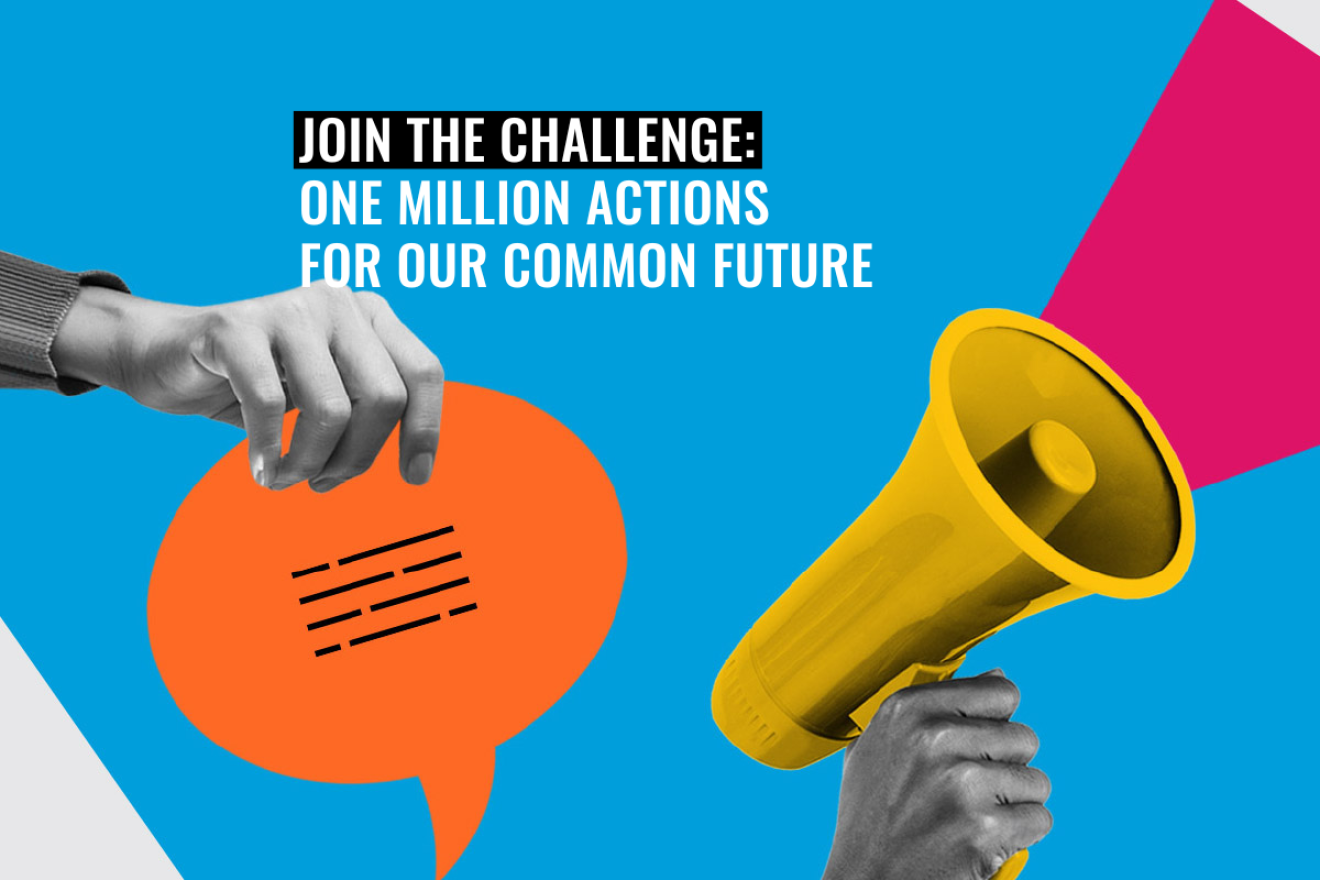
hands holding megaphone and speech bubble

The Goals can improve life for all of us. Cleaner air. Safer cities. Equality. Better jobs. These issues matter to everyone. But progress is too slow. We have to act, urgently, to accelerate changes that add up to better lives on a healthier planet. Find new inspiring actions on the app and at un.org/actnow.

Today, half the world is under 30, and this generation is a powerful force for peace. The UN "Hear Us. Act Now for a Peaceful World" campaign, launched on the International Day of Peace, aims to include, invest in, and partner with young people to build lasting peace. 

Thomas the Tank engine

Learn more about the Sustainable Development Goals! On our student resources page you will find plenty of materials for young people and adults alike. Share with your family and friends to help achieve a better world for all.

SDG 10: Reduced Inequalities


Goal 10: Reduced Inequalities

Reduce inequality within and among countries


More from the
United Nations

Featured stories from across the United Nations and our world-wide family of agencies, funds, and programmes.

A woman is standing at the entrance to a door. A pink curtain covers the entrance to the apartment behind her. OHCHR, Human Rights

Fighting for the land they were promised

In rural Honduras, 115 women from the Galilean Peasant Women’s Movement are fighting for land to grow food, support their families and build a better future. Led by Nolvia Albertina Ovando, the women have faced eviction, threats, stigma and criminalisation. Ovando was detained for five months after a 2023 eviction and was later cleared of the public stigma against her. In November 2025, the National Agrarian Institute agreed to grant the group 300 manzanas — 210 hectares / 510 acres —  of land, but ownership has yet to be formally transferred. With support from UN Human Rights, the women continue pressing for land rights, gender equality and dignity.

A community gathering on the topic of sustainable water and sanitation held in a large room in Kot Momin, Punjab, Pakistan. World Bank, Water

The Water Crisis Isn’t Just About Money — It’s About Using It Wisely

The world needs far more investment in clean water and sanitation, yet governments often fail to spend the money already set aside. Between 2009 and 2020, about 28% of water-sector budgets went unspent, according to the World Bank. Delays in planning, approvals, land acquisition and procurement can leave too little time to complete projects. Better multi-year planning, stronger coordination and well-prepared projects can help turn budgets into working water systems. More money matters, but making sure existing funds are actually used is just as important.

A large solar power facility located in an arid desert environment. UNEP, Energy

Clean energy, without leaving anyone behind

The global energy system powers almost everything we do, but it is also fuelling some of the planet’s biggest challenges. UNEP’s Global Environment Outlook says transforming the system means rapidly expanding renewable energy, improving energy efficiency and redirecting fossil fuel subsidies towards clean, affordable power. But the transition must also protect people and nature, including communities affected by mining for renewable-energy minerals. Expanding grids, local renewable systems and clean cooking can widen energy access. With political will, a cleaner energy system can also be fairer and more resilient.

Slavery and Human Trafficking, IOM

Trapped by a false promise

A job offer in Cambodia became trafficking and forced labour for Eric and his pregnant wife, until IOM helped their family return home safely.

Displaced Persons and Refugees, UNHCR

Home remains out of reach

For displaced families in southern Lebanon, damaged homes, insecurity and destroyed infrastructure make returning home unsafe and uncertain.

Science and Technology, ILO

AI puts trafficking surveys to the test

AI-assisted testing found that a trafficking questionnaire identified 83–92% of known adult trafficking cases, helping refine questions before field testing.

SDG 7: Affordable and Clean Energy, UNOPS

Powering brighter rural futures

Solar mini-grids are transforming rural Sierra Leone by extending business hours, reducing food waste, improving safety and giving children more time to study.

What we do

Due to the powers vested in its Charter and its unique international character, the United Nations can take action on the issues confronting humanity in the 21st century, including:

Structure of the
United Nations

The main parts of the UN structure are the General Assembly, the
Security Council, the Economic and Social Council, the Trusteeship Council, the International Court of Justice, and the UN Secretariat. All were established in 1945 when the UN was founded.

The General Assembly is the main deliberative, policymaking and representative organ of the UN. All 193 Member States of the UN are represented in the General Assembly, making it the only UN body with universal representation.

The Security Council has primary responsibility, under the UN Charter, for the maintenance of international peace and security. It has 15 Members (5 permanent and 10 non-permanent members). Each Member has one vote. Under the Charter, all Member States are obligated to comply with Council decisions.

The Economic and Social Council is the principal body for coordination, policy review, policy dialogue and recommendations on economic, social and environmental issues, as well as implementation of internationally agreed development goals.

The Trusteeship Council was established in 1945 by the UN Charter, under Chapter XIII, to provide international supervision for 11 Trust Territories that had been placed under the administration of seven Member States, and ensure that adequate steps were taken to prepare the Territories for self-government and independence.

The International Court of Justice is the principal judicial organ of the United Nations. Its seat is at the Peace Palace in the Hague (Netherlands). It is the only one of the six principal organs of the United Nations not located in New York (United States of America).

The Secretariat comprises the Secretary-General and tens of thousands of international UN staff members who carry out the day-to-day work of the UN as mandated by the General Assembly and the Organization's other principal organs.

Learn more

Podium of the General Assembly Hall seen from below with the gold wall and the golden UN logo behind

The United Nations process to appoint the next Secretary‑General continues with interactive dialogues guided by the principles of transparency and inclusivity. Watch the dialogues with the candidates: Ivonne A-Baki (20 August), Michelle Bachelet Jeria (21 April), María Fernanda Espinosa Garcés (15 June), Rafael Mariano Grossi (21 April), Rebeca Grynspan Mayufis (22 April), Olara Otunnu (19 August), Carolyn Rodrigues Birkett (18 June) and Macky Sall (22 April).


A group of people carrying their few belongings, walking in front of buildings in ruins, at sunset.

This series shines a light on communities facing conflict, displacement, public health emergencies and other humanitarian challenges around the world. Drawing on reporting from across the UN system, it amplifies voices from countries including Haiti, Gaza, DR Congo, Yemen, Afghanistan and Myanmar, to foster understanding, encourage engagement, and help mobilize support, assistance, and protection for the most vulnerable people.

Climate Change is one of the defining issues of our time and we are at a pivotal moment. From shifting weather patterns that threaten food production, to rising sea levels that increase the risk of catastrophic flooding, the impacts of climate change are global in scope and unprecedented in scale. Taking decisive action today will make adapting to these impacts in the future more effective and less costly.

General Assembly hall with the Secretary-General at the podium

The United Nations is the only place on Earth where all the world's nations come together to discuss common problems and find shared solutions that benefit all of humanity. Learn about the main areas of the UN’s activities; how it makes a difference to the world’s people; and how every citizen can get involved and make a contribution. 

Watch and Listen

Video and audio from across the United Nations and our world-wide family of agencies, funds, and programmes.

Premiered at United Nations Convention to Combat Desertification (UNCCD) COP17, the short documentary follows the Silk Road Caravan across 8,000 kilometers of Eurasia, capturing its people, landscapes and stories. The Rangelands Ministerial Dialogue explored stronger policies and land-use planning to protect rangelands, pastoralist livelihoods and community-based stewardship.

Investing in global animal health

The Global Partnership Programme for Transboundary Animal Diseases (GPP-TAD) strengthens global partnerships to prevent, control and eliminate transboundary animal diseases, protecting food security, livelihoods, trade and resilient agrifood systems.

25th Anniversary - Durban Declaration and Programme of Action

The Durban Declaration provides a strong foundation for advancing global efforts to combat racism, racial discrimination, xenophobia and related intolerance worldwide.

UN Podcasts

Corinne in a red suit seated at a stage with the blue backdrop of the World Economic Forum behind

The UN is my life, my family (AAN S13-E11)

“Despite all our efforts [to showcase the UN's impact], people just don't realize that actually their whole life is assisted by the UN... making international phone calls to flying planes internationally, sending mail abroad and having vaccines that are certified by the WHO as being healthy and useful.”

Outgoing Executive Director of the Kofi Annan Foundation Corinne Momal-Vanian previously spent three decades serving with the United Nations. For her, the UN’s founding values have always been a north star, not just for her career, but also for her family and her whole life.

“It's really putting the human dignity at the center. That every human being deserves to live a fulfilling life and life in dignity, that's also at the heart of the Universal Declaration of Human Rights and those are truly universal aspirations.”

From working against apartheid to stabilising post-genocide Cambodia, Corrine Momal-Vanian has deployed for the UN at compelling moments across the world. In this episode, she looks back on serving two Secretary-Generals during some of the darkest and dangerous moments in the organization’s history, and shares why the UN was always so much more than a job.

Photo: ©World Economic Forum

Latest Audio from UN News

The United Nations in Pictures

Images from across the United Nations and our world-wide family of agencies, funds, and programmes.

girl walking amid ruins
Photo:©UNICEF/UN0911800/Oraa

Reclaiming routines after the earthquakes

Two months after earthquakes struck Venezuela, children and families in hard-hit La Guaira are slowly rebuilding daily life. Nine-year-old Derwimar still lives in a tent beside her damaged former home, while 15-year-old José Ángel finds calm by returning to the sea to bodyboard. In remote Las Lapas, mobile health teams bring vaccines and care directly to families such as Yuleidy Fabiola’s. Safe water, temporary learning activities and psychosocial support are helping restore a sense of normality, but many needs remain. UNICEF and partners are working to sustain essential services while supporting a safe return to school and longer-term recovery.

woman cooking on an open fire
Photo:©WFP/Daisy Masembe

When the rains fail, hunger grows

In Uganda’s Karamoja region, failed rains have devastated crops and left more than 600,000 people facing hunger. For Paulina Awii, the drought meant watching her sorghum wither and struggling to feed her five children, including 16-month-old Margaret, who developed acute malnutrition. Food assistance and monthly cash support are now helping the family buy nutritious food, while Margaret has gained weight. Across Karamoja, the World Food Programme and the Government are providing food, school meals and nutrition support, while helping communities grow drought-tolerant crops and prepare for future weather extremes.